
My Trial Posts
You Are Right, Moses! But Pharaoh Feeds Us
30 May 2026
You Are Right, Moses! But Pharaoh Feeds Us
We are the children of an era whose rebellion is lost, whose words are weary. We have succumbed to materiality. We have fallen captive to comfort in a heavy defeat. It seems we have somewhat crossed that threshold where the things we own begin to own us. Look up at the sky every now and then, let the sun blind you, for the world is far too dazzling.
In the past, there were men who quickened their pace when the evening call to prayer echoed, carrying in their pockets a meager but weighty, righteous fatigue. Hidden within the sweat of their brows was that pungent scent of rain hitting the soil, reminding man of his true essence. They were the guardians of that magnificent treasure called contentment. They believed without a bargain, without a doubt, that sustenance descended from the heavens, was kneaded with the earth's abundance, and came solely from the "Provider." Sitting on their divans in the neighborhood alleys, sipping tea from their tulip-shaped glasses, they paid little mind to the world's frantic rotation on its axis. Because the world was not a place valuable enough to stop their hearts, rob them of sleep, or make them trample upon their honor. The philosophy of a single cloak and a single morsel was not mere literature; it was life itself. The world's greatest feast was concealed within a net bag of apples or a single loaf of bread they took home.
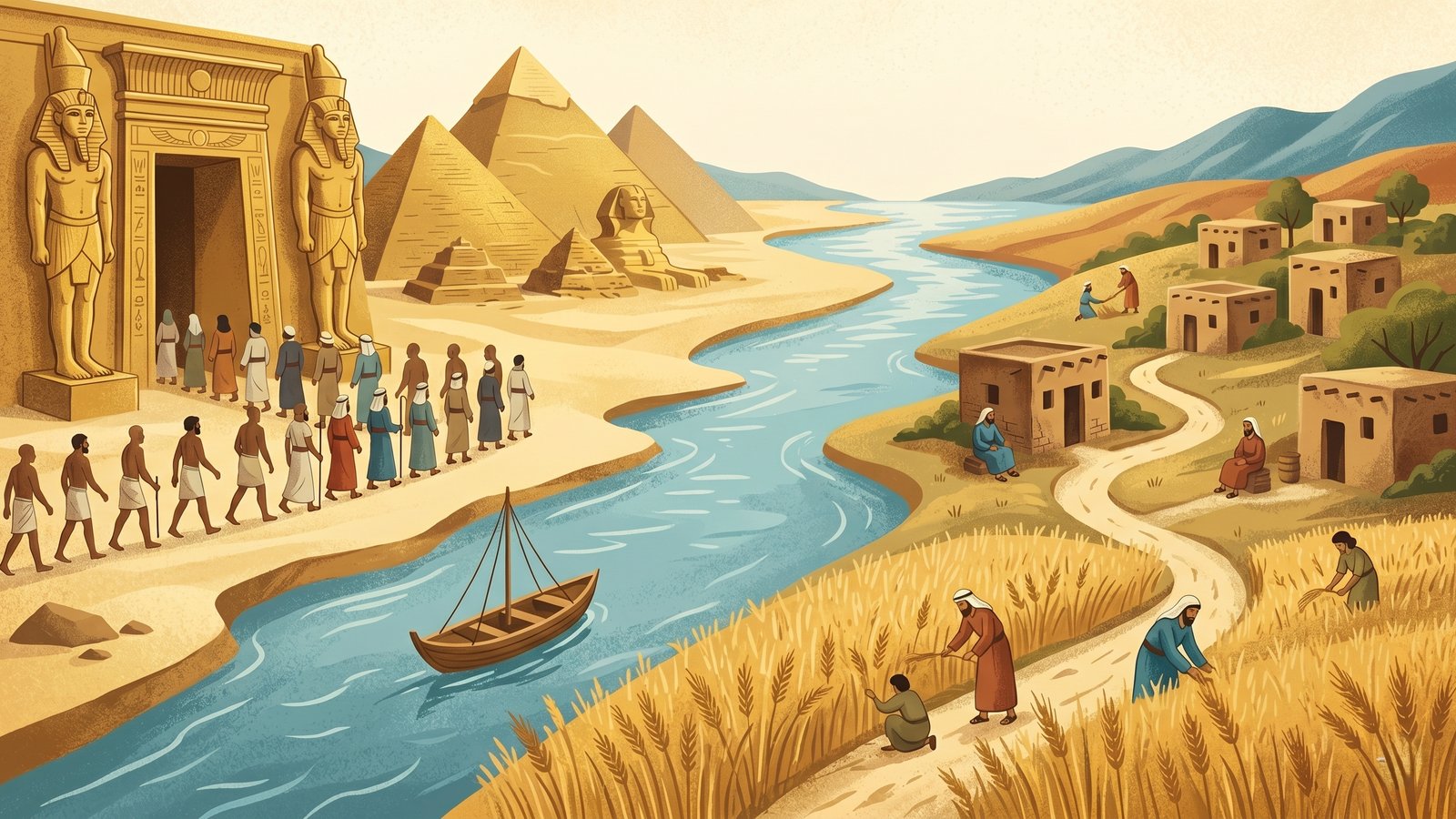
Then the cities grew; or rather, they swelled. The houses with wooden bay windows, the geranium-scented courtyards, and those elegant streets that never blocked one another's sunlight were replaced by glass palaces piercing the sky, and glass towers that imprisoned the sun and the wind. These were the pyramids of modern times, and the pharaohs of these pyramids were nothing like the ancient ones; they wore ties, smelled of fine cologne, and were exceedingly polite. And we became the strange, enchanted slaves who willingly carried stones for the construction of those pyramids, and what’s more, took pride in the corporate ID cards around our necks and the branded coffees in our hands while doing so. Our chains were now made of gold; they were shackled not to our ankles, but to our minds, our desires, and our bank accounts. We had named our fetters "career goals," "monthly quotas," and "performance reviews."
"You are right, Moses! But Pharaoh feeds us."
This is one of the most bitter, naked, and shameless confessions in history. It is the cipher of that monumental trap man has set for himself, the shirt of shame he has put on with his own hands. With one part of ourselves, we always want to shout that we stand by truth, nobility, justice, and honor. We grow fierce with that booming, uncompromising voice in İsmet Özel’s verses; we declare, "my name is written in the ranks of the people," and we supposedly rebel against the system, the cogs, this savage order that grinds humanity down. At tables, in dimly lit third-wave coffee shops, in the loud echo chambers of social media, we are all a valiant Moses. We all hold our virtual staffs, sworn to part the sea of tyranny and lead the oppressed to the shores of salvation. Our sentences are sharp, our moral superiority indisputable.
Yet those virtual heroics, our ornate acts of resistance, simply evaporate when the beginning of the month arrives and salaries are deposited into those familiar accounts, when credit card statements pile up at the door, when mortgage installments strike our faces like a slap. That sea we swore to part does not split in two, but quietly closes over us; what drowns is, once again, our own truth. That revolutionary rebellion screaming at the top of its lungs inside us quietly buttons its jacket and bows its head as we swipe our cards through the security turnstiles at the plaza doors. We know as well as our own names that Moses is the one who is right, that truth, beauty, and goodness are on his side. But we never have the courage to renounce those ostentatious comfort zones, flashy titles, company cars, holiday packages, and gilded all-inclusive buffets that the modern Pharaohs offer us. Comfort has taken our faith hostage.
What a strange, heartbreaking contradiction, isn't it? We believe in the miracle of the parting of the Red Sea; our eyes well up with tears as we read the verses about tyranny sinking into the waters and the righteous emerging victorious, yet we do not hesitate for a moment to sit cross-legged at Pharaoh's table, just to have a larger office with a sea view. We love the truth, of course; we love writing its poetry and singing its ballads, but we do not love paying even an atom's weight of a price for its sake. Moses' staff is magnificent, his story deeply epic, his cause utterly sacred; yet in Pharaoh's palace, provisions are plentiful, the radiators are burning, and that clockwork machinery of exploitation sells us "security." And we hide even from ourselves the fact that we have turned into wretches who expect security not from God, but from the system.
Just like in Mustafa Kutlu's Anatolian-scented stories, it is as if the mainspring of our hearts has unwound ever since we were severed from the soil. We have forgotten the secret of the seed falling into the earth, the submission of the sprout reaching for the sun. We have been swept far away from the naive world of those who opened their shops saying "whatever is destined" and who sent their first customer of the day to their neighbor. That delicate, sacred string within us snapped the day we forgot the Giver of Sustenance and began to mistake the one who pays our salary for the Lord of Provision. The Pharaohs no longer terrify us with whips, but with payrolls. It feels as though our souls are melting away, doesn't it?
Moses is right. We all know this very well, deep down inside, when night falls and we strip away our gilded titles, our ornate diplomas, and our designer clothes. We know it when we lay our heads on the pillow, when we are left alone with our conscience in the dark. He was right, and mankind's true salvation lay precisely there. But we are so utterly afraid of our feet touching the mud, of thirsting in the Wilderness of Tih, of having to subsist on manna and quails—in short, of embarking on that arduous and grueling journey of freedom... For the sake of a full stomach—or rather, for a larger-screened smart TV, a newer, quieter car—we declare the slavery of our souls with our own hands, and amidst applause at that. We hang our certificates of enslavement on our walls as if they were plaques of gratitude.
Still, we are human; that subtle call of our innate nature does not fall entirely silent, and we manage to deceive ourselves with highly elegant, intellectual excuses. Every now and then, we swallow hard, gaze out of windows into the distance at unreachable horizons, and let out a deep sigh. "The system is built this way, what can we do? We are all cogs in a giant wheel; are we going to change the world all by ourselves?" we say. By saying so, we secretly wink at Moses, conveying the message, "Look! My heart is actually with you," and thus slightly soothe our conscience; while simultaneously continuing to quietly chew the delicious morsel offered on Pharaoh's golden tray and sip from his wine. We mask our hypocrisy under the guise of "the realities of life."
In conclusion: we possess neither the courage to follow Moses into that harsh desert, to part the seas, and to topple idols; nor are we so blind as to become utterly ruthless and turn into Pharaohs ourselves within his palace. Stuck in that Purgatory between the two, we live out our days as the wretches of modern times—our stomachs stuffed full but our souls writhing in starvation, our bodies incredibly comfortable but our minds held captive. And perhaps our greatest punishment is having built this hell within ourselves: silently carrying the sharp, piercing pain of Moses' righteousness in our hearts for a lifetime, even as we gorge ourselves at Pharaoh's magnificent table, dizzy from its splendor... Until the day we find the courage to grasp that staff, we continue to live on, swallowing hard.
✒️ emre May 30, 2026 - ankara